
Views: 0 Author: Site Editor Publish Time: 2026-01-30 Origin: Site


In the PCB production process, drilling machines and routing machines are two core pieces of equipment. The former focuses on hole processing of circuit boards, while the latter is responsible for profile cutting. Many practitioners often confuse the functions of the two when selecting models, falling into decision-making dilemmas. Next, we will sort out the core selection points in a concise and straightforward way to help you quickly find suitable equipment and avoid common misunderstandings.
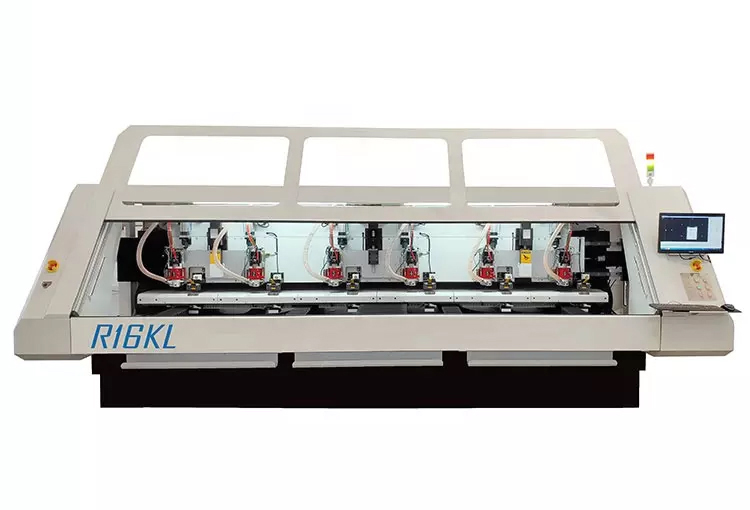
First, it is important to clarify that drilling machines and routing machines have completely different functions and cannot replace each other. The core responsibility of a drilling machine is to drill various metallized holes such as through holes and blind holes. When selecting a model, the focus should be on hole diameter accuracy and drilling efficiency. A routing machine is mainly responsible for circuit board profile cutting, board separation and slot milling. Profile dimensional accuracy, edge smoothness are the core evaluation indicators. The two perform their respective duties and jointly ensure the production quality of PCB boards.
Regarding model selection, it is necessary to accurately match according to your own production needs. For drilling machine selection, three core requirements can be focused on: if processing precision boards with small apertures (0.1–0.3mm), such as HDI boards and medical boards, it is recommended to choose models with high-speed spindles (≥60000rpm) equipped with laser positioning; if processing thick boards (1.0–3.0mm) with large apertures (≥0.3mm), priority should be given to models combining high-power spindles (≥1.5kW) and rigid frames to ensure processing stability. Production batch size is also crucial. For small-batch production, economical domestic models such as Han's PCB-2000 are sufficient; for medium-batch high-precision needs, mid-to-high-end domestic models such as Jaguar JAGUAR-3000 can be selected; for large-batch high-end production, imported brands such as Mitsubishi and Hitachi are recommended.
Routing machine selection can focus on two core scenarios: for processing small-sized boards (≤300×200mm), small routing machines such as Jaguar J-100 are compact and flexible with stronger adaptability; for processing large-sized boards (≥600×400mm), heavy-duty routing machines are required to avoid board deformation during cutting. In terms of accuracy and efficiency, manual tool change models are cost-effective for ordinary board processing; models with visual positioning and automatic compensation functions are needed for high-precision or special-shaped board processing; for large-batch production, automatic loading and unloading models are recommended to improve processing efficiency.

In the process of model selection, there are five common misunderstandings to avoid. Do not covet low prices. Low-priced models often have problems such as insufficient accuracy and frequent failures, which will increase maintenance and consumable costs in the long run. Do not force one machine to be multi-purpose. Drilling machines and routing machines have significant functional differences, and mixing them will inevitably lead to product scrapping. Attention should be paid to consumable compatibility. Drill bits and router bits must match the equipment model, otherwise processing quality will be affected. After-sales service cannot be ignored. Priority should be given to brands with local after-sales teams to avoid production delays caused by equipment failures. Finally, be sure to conduct trial runs in advance to verify the accuracy and stability of the equipment through actual sample testing, and avoid blind decision-making.

